What Is The Maturity Gap™? | Leadership Growth Framework
I've mentioned The Maturity Gap™ in almost everything I've written and taught over the past few years, but I've never actually sat down and explained what it is from the beginning. So many people ask me about it after a keynote or a training session that I think it's time to lay it out plainly, here, in one place.
The Maturity Gap™ isn't a personality test or a leadership style. It's the space between what a person knows how to do and what they're actually equipped to sustain when life gets hard.
The Gap Most People Never Name
Here's what I mean by that. Someone can know exactly how a difficult conversation should go. They can know the "right" thing to say to their spouse, their child, their employee. They can know, intellectually, that they should regulate their emotions before reacting.
And still not do it.
That gap between knowing and actually being equipped to follow through is what I call The Maturity Gap™. It's not about intelligence, effort, or even willpower. It's about whether the internal wiring is in place to sustain the behavior a person already knows they should have.
Most of us spend our lives trying to close that gap with more information. More books, more advice, more motivation. But information was never the missing piece. The missing piece is understanding what's actually driving the gap in the first place.
What Actually Creates The Gap
Through years of clinical work in brain health, alongside my own path through military service, ministry, and leadership, I kept seeing the same pattern. The gap is created by a combination of things most people never get taught to look at:
Unregulated stress responses. A brain under chronic stress defaults to old, automatic patterns rather than intentional ones.
Unexamined beliefs. Beliefs formed years or decades ago quietly continue to run the show unless someone stops to notice them.
Communication habits. Patterns of avoidance, defensiveness, or shutting down that were learned long before adulthood.
Emotional regulation gaps. The actual physiological ability to stay calm and clear-headed in the middle of pressure, not just the desire to.
None of these show up on a resume. None of them get addressed in a typical leadership seminar. And that's exactly why so many capable, intelligent people still find themselves stuck in the same patterns year after year.
Why This Matters for Leadership
I didn't build The Maturity Gap™ as an abstract concept. I built it because I watched in myself, and in the leaders and organizations I've worked with how this gap plays out in very real, very costly ways.
A manager who knows they should have a hard conversation with an underperforming employee, but avoids it for months. An executive who understands the importance of listening, but interrupts every meeting because they've never regulated the anxiety underneath it. A new leader with real potential, promoted into a role they aren't yet equipped to sustain not because they lack ability, but because no one ever helped them close their own internal gap first.
This is why brain-based leadership development looks different from traditional training. Teaching someone a new leadership technique without addressing the gap underneath it is like handing someone a map while their car has no gas. The information isn't the problem.
How The Maturity Gap™ Shows Up Outside of Work
This framework isn't only for boardrooms. I've seen it show up just as clearly in marriages, parenting, friendships, and someone's relationship with themselves.
Someone might know they should set a boundary with a family member and still say yes every time. Someone might know their child needs patience in a hard moment and still snap anyway. These aren't failures of character. They're signs of a gap that hasn't been named yet let alone closed.
Closing the Gap Starts With Awareness
The first step in closing The Maturity Gap™ is never a new technique. It's awareness actually seeing the pattern clearly enough to recognize it in the moment it's happening, instead of only in hindsight.
From there, the work becomes about understanding the brain science behind stress and emotional regulation, examining the beliefs that have been quietly running in the background, and building the specific skills that allow someone to respond instead of react.
This is the work at the center of everything I teach, whether I'm speaking to a corporate leadership team, working with an individual client, or leading a session for a group navigating something as significant as reentry after incarceration. The setting changes. The underlying gap does not.
About Dr. Tassha Faison
The Woman Behind The Maturity Gap™
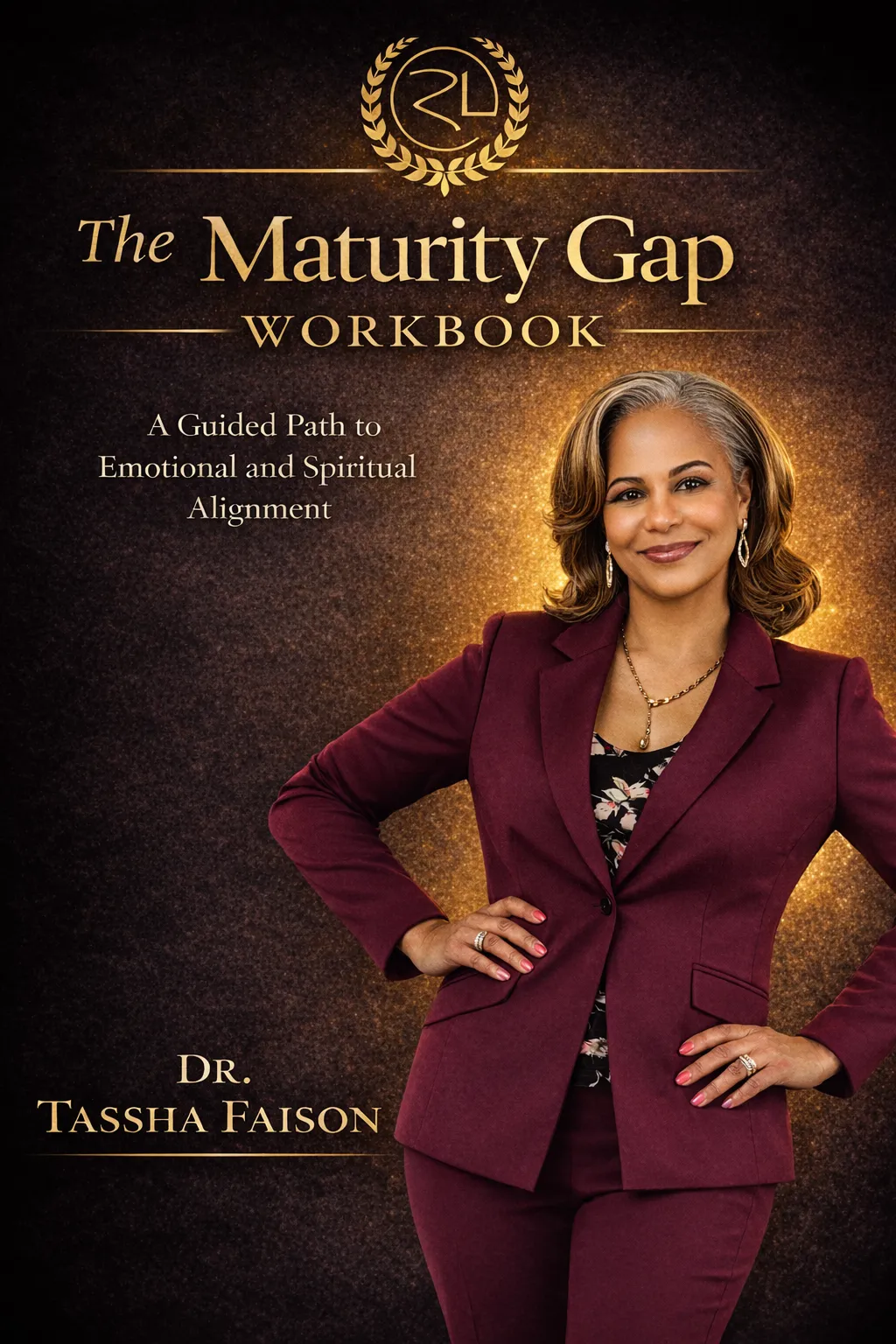
Before The Maturity Gap™ became a framework taught in boardrooms and keynote stages, it started as Dr. Tassha Faison's own lived question: why do capable, intelligent people herself included keep repeating patterns they already know aren't working?
That question, shaped by her years as an Army veteran, a licensed mental health professional, and a brain health clinician, became the foundation for the work she now leads through Regal Lifestyle Enterprise LLC — brain-based education, leadership development, and transformational speaking built to help people close the gap between what they know and how they actually live.
A Few Milestones Along the Way
Named one of the Top Influential Women of 2025 by 180 Lyfe Enterprise Magazine.
Recognized by Louisiana state leadership for her commitment to community impact and service.
From corporate boardrooms to reentry programs, faith communities to military audiences, the setting changes but the goal stays the same helping people lead themselves first, so they can lead everyone else well.
Frequently Asked Questions
Is The Maturity Gap™ a diagnosis or clinical label?
No. It's a framework for self-awareness, not a diagnosis. It's designed to help people recognize internal patterns affecting their decisions and relationships, not to label or categorize anyone.
Who is The Maturity Gap™ framework for?
It applies broadly to corporate leaders, individuals working through personal growth, couples, parents, and organizations of any kind. Anywhere there's a gap between what someone knows and what they're able to sustain, the framework applies.
How is this different from typical leadership or self-help advice?
Most advice focuses on adding new information or techniques. The Maturity Gap™ starts by identifying what's actually preventing someone from using the information they already have stress response, unexamined beliefs, and emotional regulation gaps before any new technique is introduced.
Can I explore where my own Maturity Gap™ might be?
Yes. The Maturity Gap™ Assessment is designed as a starting point for exactly that kind of reflection.
Final Thoughts
If you recognized yourself somewhere in this article a conversation you keep avoiding, a boundary you keep not setting, a reaction you keep having even though you know better that recognition is the starting point, not a failure. Naming the gap is the part most people skip. You just did it.
Dr. Faison is the creator of The Maturity Gap™, a transformational framework designed to help individuals recognize internal barriers that affect decision-making, emotional regulation, relationships, leadership, and purpose.
Ready to See Your Own Gap?
Not sure where yours shows up at work, at home, or in how you handle pressure? Start with a quick, honest look.
Take the Maturity Gap Assessment
Book a Conversation with Dr. Tassha
